Most visitors to Portugal follow a familiar path: a few days in Lisbon, a stop in Porto, and time on the beaches of the south. Those places deserve their reputations, but they represent only part of the country. Inland, away from the Atlantic, lies a landscape of granite and schist villages, cork oak plains, terraced vineyards, and mountain ranges where the pace of life feels decidedly unhurried. It is ideal territory for slow travel.
What Slow Travel Means Here
Slow travel is less about a specific itinerary than a change of mindset. Rather than ticking off sights, it means staying longer in fewer places, traveling overland, eating where locals eat, and leaving room for unplanned afternoons. Portugal’s interior suits this approach particularly well, because many of its pleasures are small and cumulative: a long lunch at a family-run restaurant, a walk between villages, an evening conversation in a café square.
It also tends to spread the benefits of tourism more widely. Many inland regions have experienced decades of population decline, and visitors who stay in local guesthouses and spend in village shops contribute to communities that see far fewer travelers than the coast.
Regions Worth Exploring
The interior is varied, and it rewards travelers who choose one or two regions rather than trying to cover all of it.
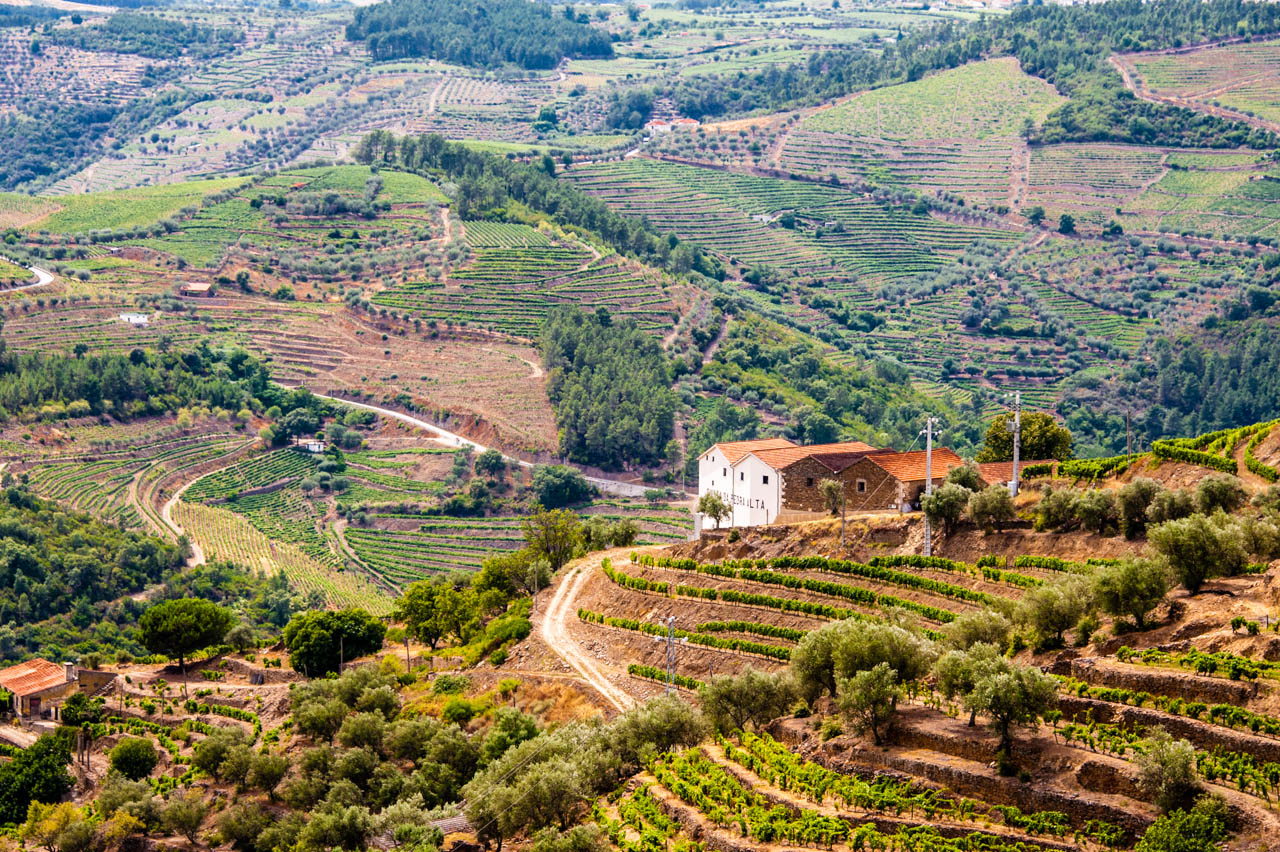
The Douro Valley. East of Porto, the Douro River winds through steep hillsides carved into terraces of vines. The region is famous for its wine production, and quintas welcome visitors for tastings and stays. A scenic railway follows the river for much of its length, making it possible to explore without driving.
The Alentejo. Covering a large share of southern and central Portugal, the Alentejo is a region of rolling plains, cork and olive groves, and whitewashed hilltop towns. Évora, with its Roman temple remains and historic center, makes a good base, while smaller fortified villages such as Monsaraz offer sweeping views over the surrounding landscape and a large reservoir.
The Serra da Estrela and the Beiras. In the center of the country, the mountains of the Serra da Estrela offer hiking, glacial valleys, and a strong tradition of cheese making. The surrounding Beira regions are home to historic villages built of granite, some perched dramatically on hillsides.
The schist villages. Scattered across the forested hills of central Portugal, these small settlements are built from dark slate-like stone. Many have been carefully restored and are connected by walking trails, river beaches, and quiet roads.
The interior rewards those who resist the urge to keep moving. The second evening in a village is usually far richer than the first.
Getting Around
A car offers the most flexibility for exploring small villages, since public transport in rural areas can be infrequent. Roads are generally good, though mountain routes can be narrow and winding, so allow more time than navigation apps suggest.
That said, it is entirely possible to travel without a car if you plan carefully. Consider these options:
- Regional trains serve some routes, including the scenic line along the Douro.
- Intercity buses connect most towns, and are often more comprehensive than the rail network inland.
- Local taxis can bridge the gap between a bus station and a rural guesthouse, and many hosts can help arrange them.
- Walking routes link many villages, allowing multi-day hikes with luggage transfers in some areas.
Check timetables in advance, particularly on weekends and holidays, when services may be reduced.
Where to Stay and What to Eat
Accommodation inland tends to be small-scale and personal. Rural guesthouses, restored manor houses, farm stays, and village rentals are common, and many are run by families who are happy to share recommendations. Staying several nights in one place allows you to explore the surrounding area in day trips without packing and unpacking constantly.
Food is one of the great joys of the region. Cooking is rooted in local produce and tradition, and meals are often generous. Look out for:
- Hearty bread-based dishes and stews in the Alentejo, often flavored with garlic, olive oil, and fresh herbs.
- Mountain cheeses from the central highlands, especially in winter.
- Roast meats, sausages, and slow-cooked dishes in the north and center.
- Regional wines, including table wines from the Douro and the Alentejo, often available at modest prices in local restaurants.
Lunch is frequently the main meal of the day, and many small restaurants offer a set daily menu. Opening hours can be limited in villages, so it is wise to ask your host where to eat, especially early in the week.
When to Go
Spring and autumn are particularly pleasant inland. Wildflowers cover the Alentejo in spring, while autumn brings the grape harvest to the Douro and comfortable walking weather. Summer can be very hot in the interior, especially in the south, so midday activity is best kept to a minimum. Winter is quieter and cooler, with the possibility of snow in the higher mountains, and some smaller businesses close for part of the season.
Closing Thoughts
Portugal’s interior is not a checklist destination. Its appeal lies in the slow accumulation of experiences: shared meals, quiet roads, village festivals, and landscapes that shift with each valley. Choose a region, stay longer than you think you need, and allow the rhythm of rural life to set the pace. The reward is a deeper and more personal sense of the country.